B2B
•
2026-06-07
•
By B2B Lead
The Future of B2B Payments: How Stablecoins Are Streamlining Global Supply Chains
International wholesale trade is slowed down by multi-day bank settlements and high FX markup. Discover how stablecoins enable real-time supplier payments.
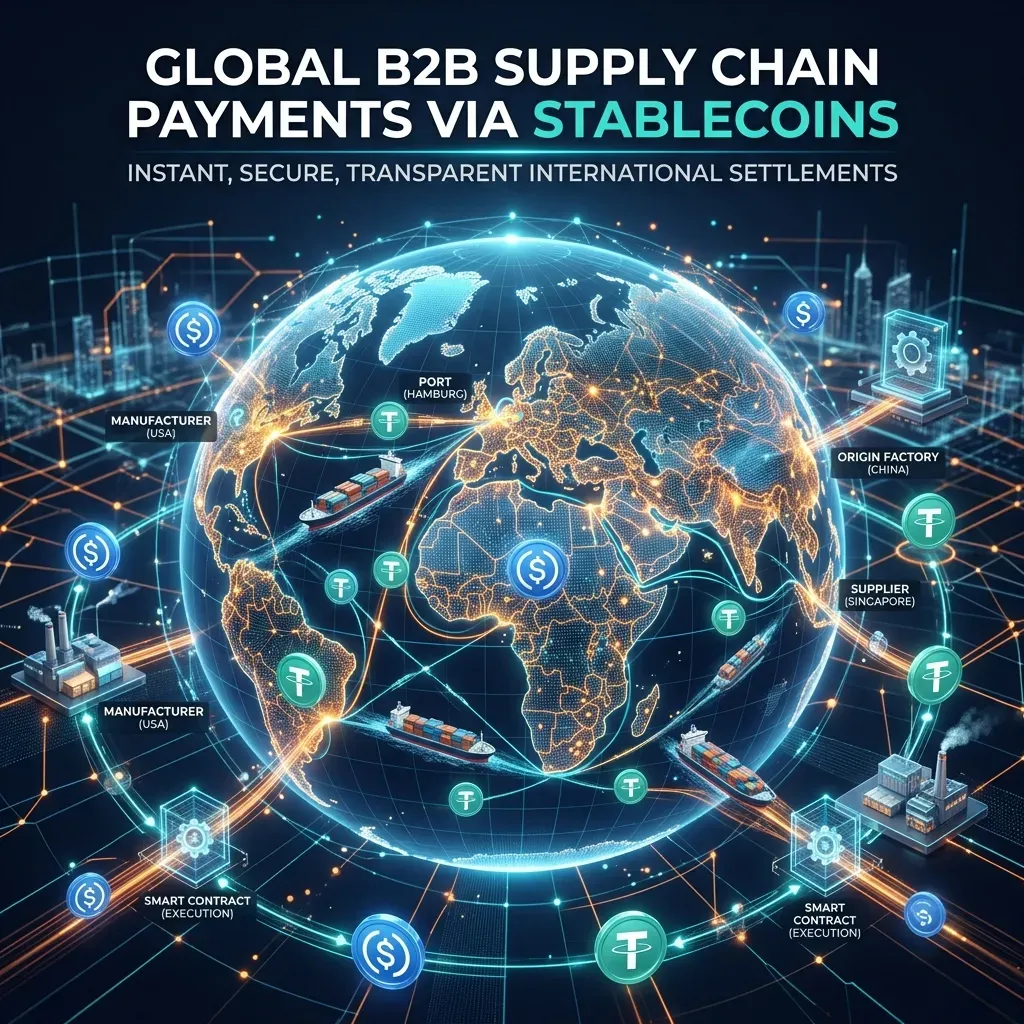
The Future of B2B Payments: How Stablecoins Are Streamlining Global Supply Chains
Global supply chains run on thin margins and strict schedules. Yet, the financial networks that support them are slow, expensive, and opaque.
When a retail brand in Germany orders inventory from a manufacturer in Vietnam, the payment must travel through multiple correspondent banks. Along the way, the payment incurs fee deductions, suffers from unpredictable currency conversion markups, and takes anywhere from 3 to 5 business days to arrive.
During this settlement window, the manufacturer will not release the goods, creating shipping bottlenecks, delayed arrivals, and locked-up working capital.
Stablecoins, integrated with Wullut’s B2B payment engine, are changing this paradigm by introducing instant settlement to international trade.
The Correspondent Banking Friction
The SWIFT network has connected the world's banks for fifty years. However, SWIFT does not move money; it only moves messages. The actual movement of money relies on bilateral credit relationships (nostro/vostro accounts) between intermediary banks.
Every hop in this chain adds cost and delays:
- **FX Markups**: Banks charge an hidden spread of 1% to 3% above the mid-market rate.
- **Intermediary Fees**: Correspondent banks extract flat processing fees (often $15 to $50 per transaction).
- **Compliance Holds**: Manual compliance reviews can pause payments for days with no status updates.
For a business purchasing $100,000 worth of materials, these inefficiencies can cost thousands of dollars and trigger significant operational delays.
Stablecoin Settlement: Instant, Auditable, Cheap
By moving B2B payments to fiat-backed stablecoins (like USDC and EURC) running on high-throughput blockchains, Wullut allows businesses to bypass the legacy banking network completely:
* **Real-time Settlement**: Transactions settle in seconds, allowing manufacturers to verify payments immediately and release shipments on schedule.
* **Fractional Costs**: Transferring $100,000 via Wullut's Solana-based engine costs less than a single cent in network fees.
* **End-to-End Visibility**: Blockchain payments are publically verifiable. Both parties can see the status of the transfer in real-time, eliminating payment disputes.
Bridging the On-Ramp and Off-Ramp
The biggest barrier to stablecoin adoption in corporate treasury has been the complexity of moving money from local bank accounts into crypto assets and vice versa.
Wullut solves this by acting as the bridge:
1. **Local Fiat Funding**: A European business funds their Wullut account via local SEPA transfer.
2. **Auto-Stablecoin Conversion**: Wullut automatically swaps EUR to EURC at wholesale rates.
3. **On-Chain Payout**: Wullut routes the EURC to the Vietnamese supplier’s Wullut wallet.
4. **Local Currency Off-Ramp**: The supplier instantly converts EURC to Vietnamese Dong (VND) and withdraws it to their local corporate bank account.
By streamlining the bridge between fiat networks and on-chain liquidity, Wullut enables global businesses to enjoy the speed of blockchain technology while maintaining standard corporate accounting practices.