Market Insight
•
2026-10-04
•
By Market Team
The Death of Proprietary POS: Unifying Global QR Standards from Pix to PromptPay
How national instant payment schemes like Pix, PromptPay, UPI, and SEPA QR are converging into a unified cross-border payment protocol powered by Wullut.
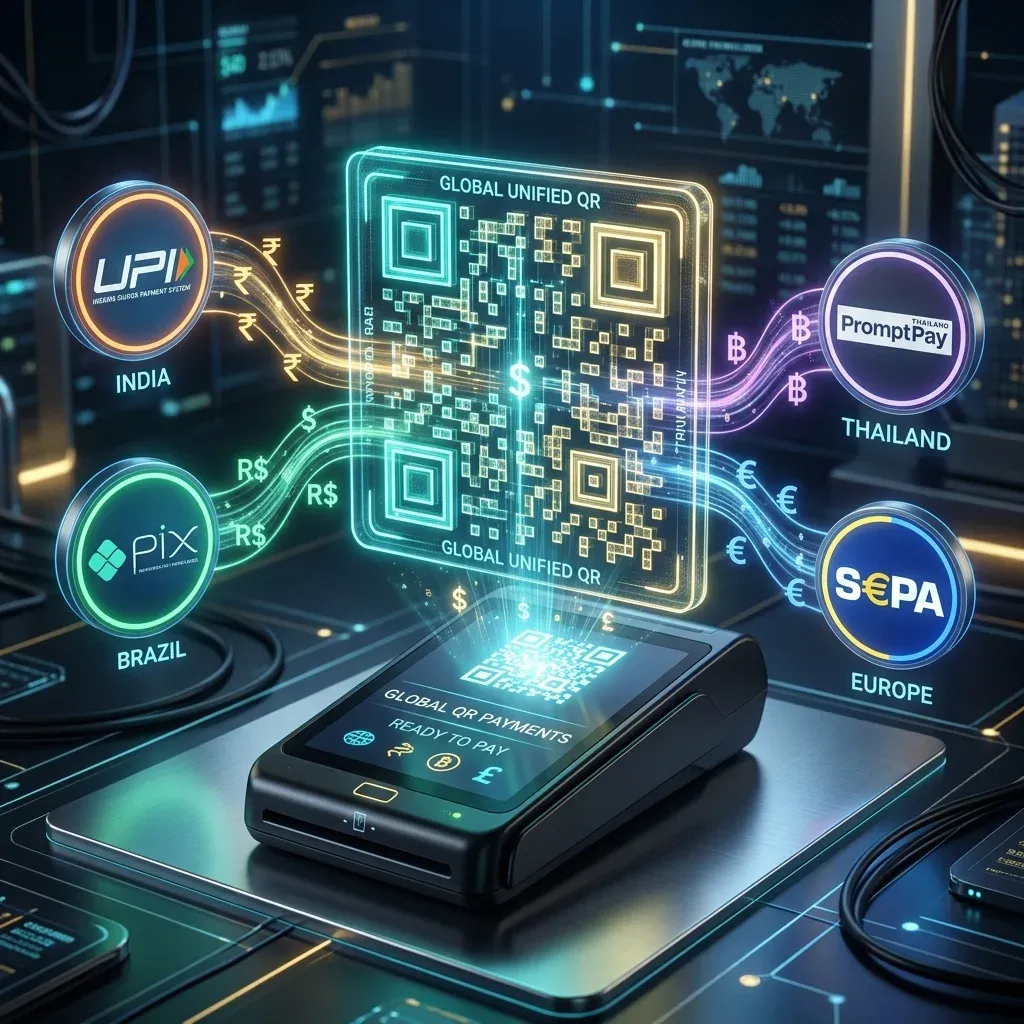
The Death of Proprietary POS: Unifying Global QR Standards from Pix to PromptPay
For international travelers and cross-border digital nomads, checkout counters around the world have long been a source of frustration. A tourist from London landing in São Paulo finds that local merchants overwhelmingly prefer Pix QR codes over physical credit cards. A Brazilian entrepreneur in Bangkok discovers that Thai street vendors and luxury boutiques alike transact predominantly via PromptPay QR codes.
Until recently, every national instant payment system operated inside its own regulatory and technical fortress. Card network duopolies capitalized on this fragmentation by charging merchants exorbitant 3% interchange fees and burdening consumers with steep foreign transaction surcharges.
In October 2026, the retail payment landscape is undergoing a massive shift. Wullut has rolled out **Global QR Interoperability**, a universal protocol layer that allows any Wullut wallet holder to scan and pay local QR codes in over 30 countries instantly.
---
The Landscape of National Payment Schemes
Over the past decade, national central banks and clearing houses developed hyper-efficient instant retail payment rails:
* **Brazil**: Pix (surpassing 4 billion monthly transactions)
* **India**: UPI (Unified Payments Interface, powering over 13 billion transactions monthly)
* **Thailand**: PromptPay (embraced by over 85% of adult citizens)
* **Singapore**: SGQR & PayNow
* **Europe**: European Payments Initiative (EPI / Wero) & SEPA Instant QR
Each system revolutionized domestic commerce with instant settlement and near-zero fees. However, because each system adhered to different messaging formats (EMVCo variants, proprietary JSON, or localized ISO standards), cross-border interoperability remained an unsolved puzzle.
---
The Wullut QR Interoperability Layer
Wullut acts as an intelligent cryptographic translation and liquidity engine:
```
[ Merchant QR Code ]
(Pix / PromptPay / UPI / SGQR / EPC QR)
│
▼ Scan via Wullut Camera
┌───────────────────────────────────────────────┐
│ Wullut Universal Scanner │
│ • Auto-detects protocol & parsing schema │
│ • Extracts merchant ID, amount & currency │
└───────────────────┬───────────────────────────┘
│
▼
┌───────────────────────────────────────────────┐
│ Real-Time Synthetic FX Bridge │
│ • User pays in local wallet balance (e.g. │
│ USDC, EURC, BRL, or GBP) │
│ • Instantly converted at wholesale FX │
└───────────────────┬───────────────────────────┘
│
▼
┌───────────────────────────────────────────────┐
│ Local Instant Clearing Relay │
│ • Injects local fiat directly into the │
│ merchant's domestic national rail │
│ • Merchant receives confirmation in < 2s │
└───────────────────────────────────────────────┘
```
1. Universal EMVCo & Proprietary QR Parsing
The Wullut mobile application features an optical decoder that instantly identifies whether a scanned QR code conforms to Brazil's Central Bank Pix specifications, Thailand's PromptPay payload, India's UPI string, or the European Payments Council's SEPA standard.
2. Wholesale Rate Settlement
Rather than being subject to predatory dynamic currency conversion (DCC) rates at the point of sale, the user sees the exact wholesale conversion rate on their screen before confirming with biometric authentication.
3. Native Merchant Receipt
The merchant doesn't need to know what currency the customer holds, nor do they need special crypto terminals or expensive hardware POS devices. To the merchant's domestic banking app, the transaction appears as a native domestic instant payment, complete with standard national reference codes.
---
Transforming Global Tourism and Micro-Merchants
The broader economic consequences of universal QR interoperability are profound:
* **Elimination of Point-of-Sale Hardware Costs**: Independent merchants and micro-entrepreneurs no longer need to pay monthly rental fees for proprietary international card readers.
* **Radical Cost Reduction for Consumers**: International travelers save up to 4.5% compared to conventional debit and credit card foreign transaction fees.
* **Instant Cash Flow**: Merchants receive funds directly in their primary operating accounts within seconds, eliminating multi-day credit card settlement delays.
The era of proprietary card rails is giving way to an open, interoperable global payments network.